





The Architecture of Silence: How Acoustic Ceilings Transform Urban Life
Noise is the invisible yet most exhausting guest of modern cities. The never-ending traffic sound of Istanbul, the hum of busy offices, the echo in cafés… in short, we all live under a constant “sound bombardment” throughout the day. This is exactly where one of the most elegant solutions of architecture comes into play: acoustic ceiling systems.
Today, choosing the right ceiling is critical not only for aesthetics but also for comfort, health, and efficiency. So how do acoustic ceilings really change urban life?
1. Managing Urban Noise in a Sophisticated Way
In dense cities, indoor spaces now require much more acoustic improvement to prevent external noises from penetrating inside. Acoustic ceiling panels:
- Reduce indoor reverberation with their sound-absorbing surfaces,
- Eliminate echo problems thanks to their noise-absorbing properties,
- Create a fresh atmosphere by establishing natural sound balance.
Today, many cafés, restaurants, open offices, and meeting rooms are transforming from places where people “cannot hear themselves” into comfortably conversational environments. The biggest reason for this is the acoustic technology integrated into ceilings.
2. Psychological Impact: Quiet Space = Less Stress
Being exposed to loud environments every day increases the stress hormone cortisol without us realizing it. The human brain remains constantly alert in noisy and echoey environments.
Acoustic ceilings work like the architecture of balance and calmness.
Less echo = a calmer mind.
The reason why global giants like Google, Apple, and Meta use intensive acoustic solutions in their offices is not only technology: it’s also to protect employee psychology.
3. Increased Productivity in Open Offices
Open offices look stylish, but talking sounds, keyboard clicks, and phone calls create many sources of distraction.
One of the biggest challenges for architects today is designing a “noise-free open office.”
The contributions of acoustic ceilings:
- Improve focus and concentration,
- Optimize speech intelligibility,
- Create privacy (voices don’t spread across the entire office),
- Provide professional sound quality in meeting rooms.
A good acoustic solution is a long-term productivity investment for companies.
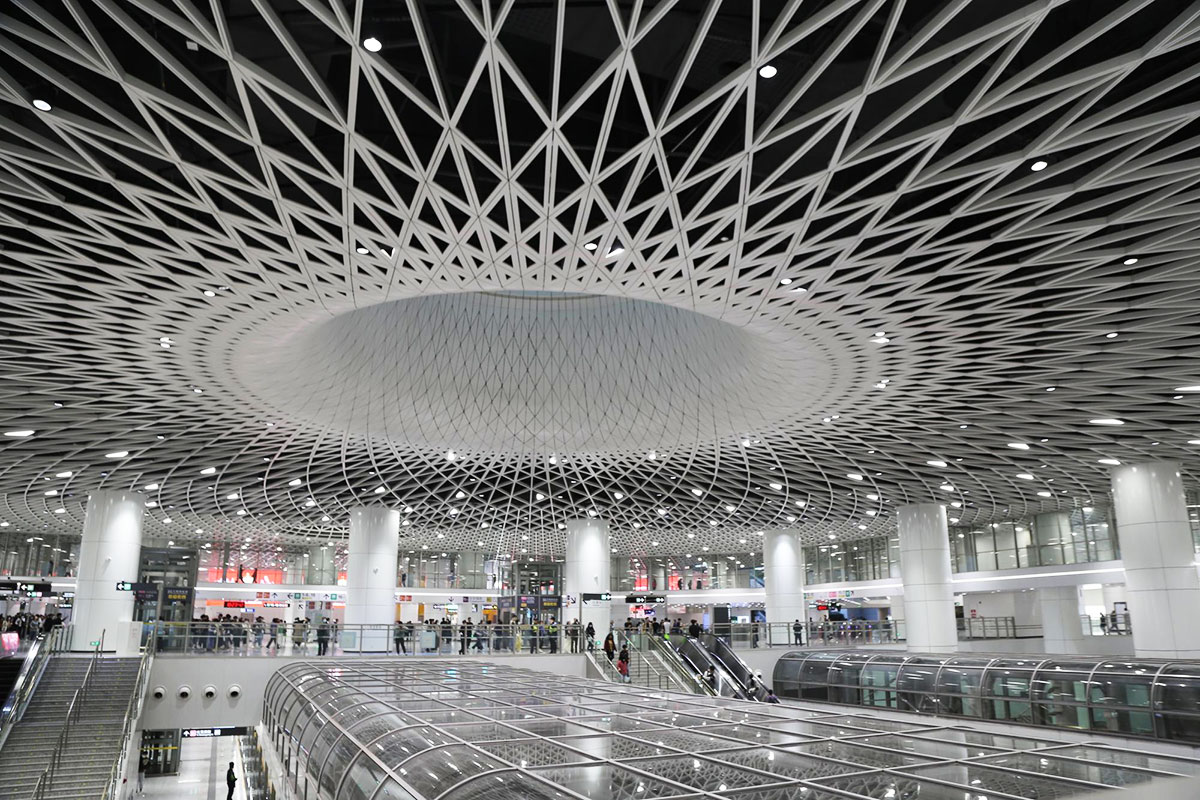
4. Space Aesthetics: The Power of Baffle, Linear, and Mesh Systems
Acoustic ceilings are no longer just technical products; they are also aesthetic design elements.
- Baffle systems: vertical depth effect, modern lines, strong acoustic performance.
- Linear metal ceilings: rhythmic appearance, strong architectural impact with linear LED.
- Acoustic mesh panels: offer both metallic elegance and natural sound absorption.
These systems have become architectural signatures that define the character of spaces. Once hidden acoustic panels are now proudly displayed as aesthetic elements.
5. Health and Comfort: A Modern Shield Against Noise Pollution
The World Health Organization (WHO) now defines noise as a public health problem.
Acoustic ceilings:
- Help people feel more energetic,
- Enable longer stays in indoor environments,
- Reduce headaches and fatigue.
Especially in areas with children, the elderly, and large crowds, acoustic regulation is becoming a necessity.
6. Future Trends: Quieter, Smarter Cities
Key acoustic ceiling trends for 2025 and beyond:
- Sustainable recycled materials,
- Acoustic + LED integrated systems,
- Digital ceiling surfaces (light, color, and sound management together),
- Customizable acoustic performance,
- “Smart noise map” designs tailored to specific spaces.
In short, the architecture of the future turns “silence” from a luxury into a standard.
Conclusion: Silence Is Now a Design Decision
Acoustic ceiling systems are not just technical solutions; they are an architectural revolution that enhances the quality of urban life.
From cafés to offices, from homes to hotels, every space becomes quieter, more comfortable, and far more livable.
In the midst of noise pollution,
those who build the architecture of silence are actually building the cities of the future.